
Future Restoration Projects

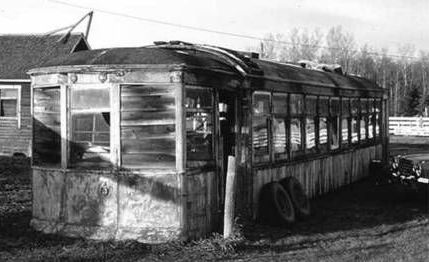
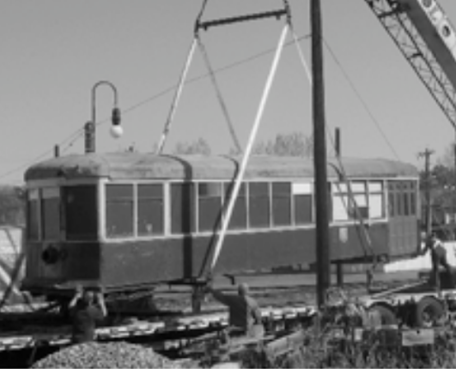
ERR #13
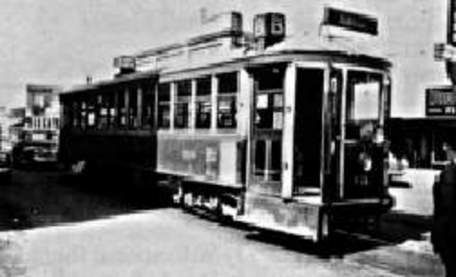
ERR #13 (1911) © Hans Ryffel, ERRS

The above picture of the decaying body of Edmonton streetcar #13 is a typical example of the condition in which future restoration projects arrive at the ERRS workshops. Upon abandonment, most streetcars were stripped of their metal parts and electrical equipment, while many bodies saw further use as cottages, chicken or pig barns, farm sheds or even roadside diners. Not being in the best of condition when coming out of service, the usually wooden bodies suffered further damage through weather and vandalism in mostly open air storage. Some of the new owners built special roofs to cover the old cars and those were the lucky ones which survived in a much better condition.

In most cases, simple restoration is out of the question and the respective car has to be fully rebuilt from scratch with the help of the remaining sample pieces. Replacements for missing trucks, motors, controllers, compressors and other vital equipment often has to be searched for around the world or even manufactured in the society's own workshops. It is therefore not surprising that some projects take as long as 20 years and countless volunteer hours to complete.

It is the aim of the Edmonton Radial Railway Society to eventually restore at least one car of each type which once operated in Edmonton, in addition to some significant examples from other Canadian cities. Without exaggerating it may be said that work for the society will be available well into the next century and beyond the lifetime of most of it's members. To ensure these projects are completed well into the future, the ERRS tries hard to obtain and set aside vital parts which may at that time no longer be available.
At present in storage and awaiting restoration are the following streetcars:

Brandon (Manitoba) #6

Alt text Brandon #6, ca. 1915 © ERRS Collection

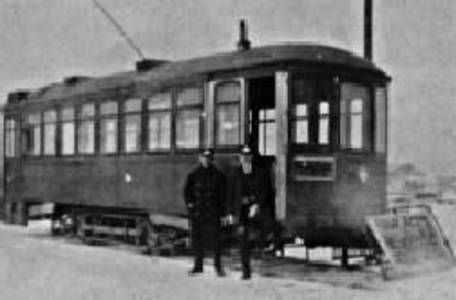
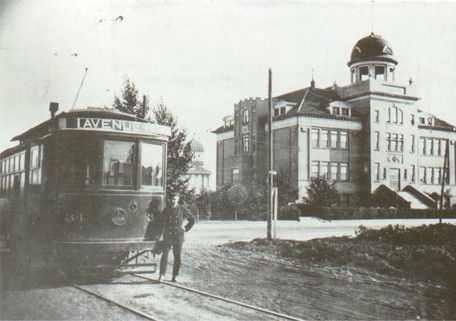
Built in 1913, this single truck car was one of the series delivered by the Niles Car and Manufacturing Company to the Brandon Municipal Railway. Brandon was one of the first Canadian streetcar systems to be abandoned in 1932 and it is quite surprising that the body of this car has survived over decades. As well as the body, a suitable truck and motors for the restoration are in storage. Many other parts are still on the search list.

Edmonton #13

Alt text ERR #13 on August 6, 1947 © W.C. Whittaker (ERRS Collection)

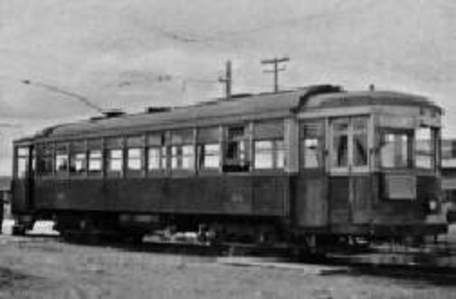
Built in 1911 by the Ottawa Car Manufacturing Company this car was one of six equipped with Westinghouse rather than General Electric motors. The car was retired from service in 1948 and is in ERRS storage for future restoration.

Edmonton #31

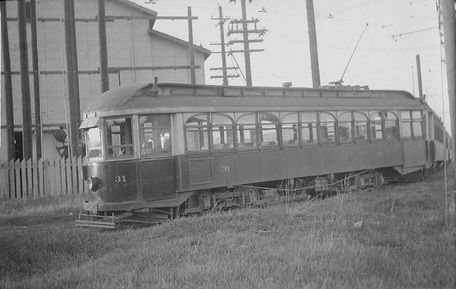
ERR #31 ERR #31 © Al Paterson (ERRS Collection)

Edmonton Radial Railway Streetcar #31 was in service from 1911 until 1949. Known as a "Prairie Preston" or "Small Preston" after its builder, the Preston Car and Coach Company, this class of car was the workhorse of most Prairie street railway systems. Regrettably it is the only known surviving body of its class. In poor condition, it will be retained as a pattern for a possible future replica car.

Charlotte (North Carolina) #35

SMR #34
Sister Car SMR #34 in 1920 © Saskatoon Public Library

This little car was originally built in 1895 as an open summer car for the Street Railway in Charlotte, North Carolina. In 1920 four of these cars were purchased second hand by the Saskatoon Municipal Railway, where they re-entered service numbered 32 - 35 and nick-named "Carolina Cars". With the exception of #33, which was rebuilt as a works car, they did not last very long and were retired as early as 1934. The body of #35 was rescued in 1999 from a farm in Cut Knife, Saskatchewan. A fitting Peckham Truck has been obtained from Zurich, Switzerland.

Edmonton #38

ERR #38
ERR #38 © Norm Corness (ERRS Collection)

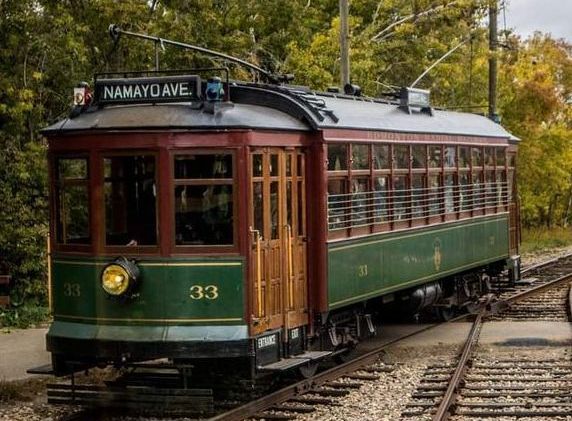
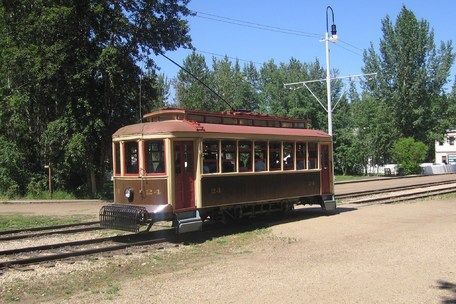
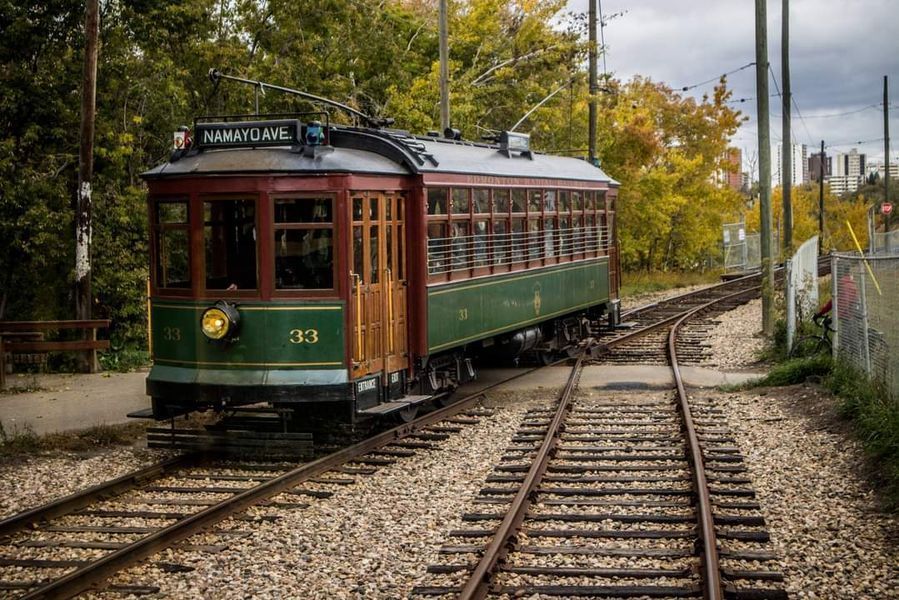
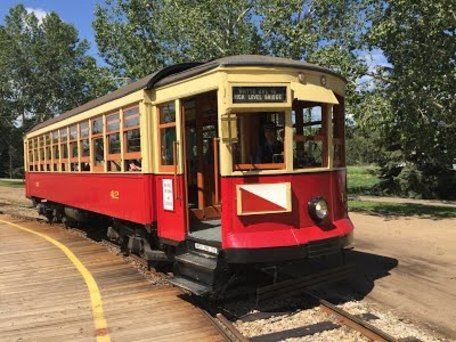
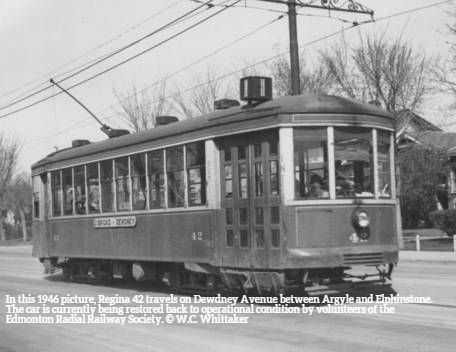
Built by the St.Louis Car Company in 1912 and retired in 1951, this car is identical to Edmonton #33 (restored in original double-ended configuration and in service on the High Level Bridge) and #42 (in service at Fort Edmonton Park).

Edmonton #53, 65 and 73

Alt text
ERR #53 © ERRS Collection

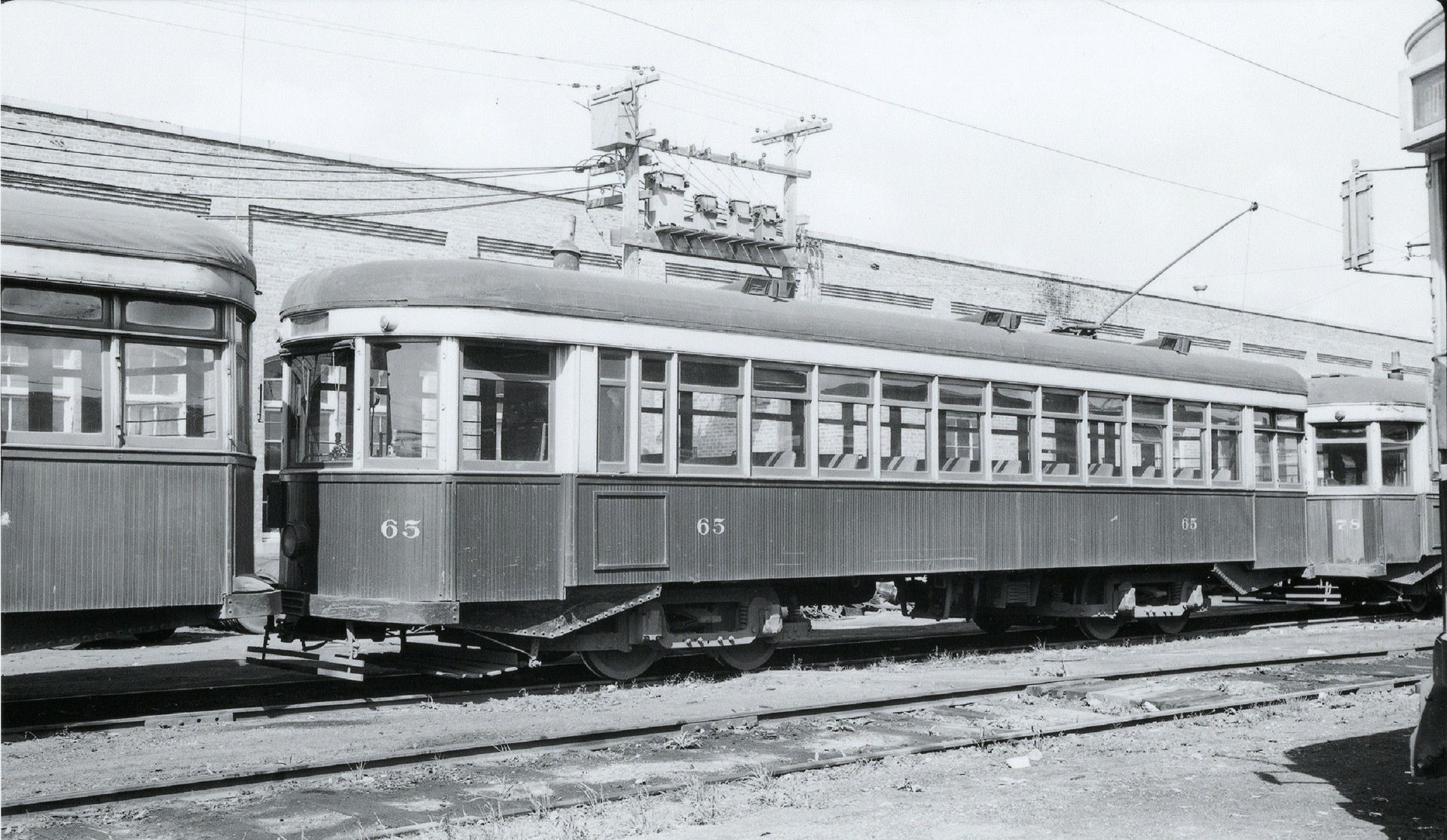
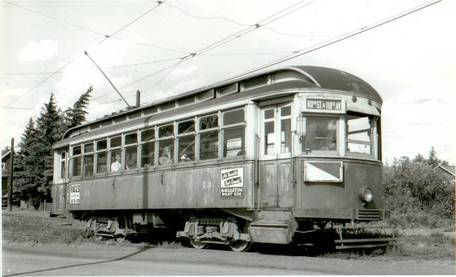
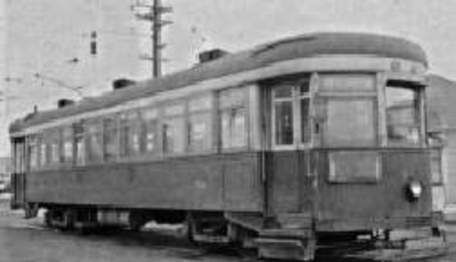
Edmonton Radial Railway #53 was built in 1913 as one of 35 streetcars of the same design obtained from the Preston Car and Coach Company. The cars were known as "Big Prestons" and most of them were running until abandonment of streetcar service in 1951. In fact, sister car #52 was the very last Edmonton streetcar in passenger service. Other bodies of the same series owned by the ERRS are #65 and #73. It is hoped to restore one of the "Big Prestons" within the not too distant future.

Saskatoon #54 and 62

SMR #62
Saskatoon Municipal Railway #62 near 24 Street on August 1, 1950
© Foster M. Palmer

Saskatoon #62 was the last factory new car delivered to this prairie city. The first 4 new cars (#50-53) were built in 1927 by National Steel Car Corporation in Hamilton and 9 more cars of the same design followed from the Ottawa Car Company in 1928 (#54-57) and 1929 (#58-62). These double truck steel framed streetcars improved riding comfort tremendously; they stayed in service until abandonment of the Saskatoon streetcar system in November 1951. Cars #54 (steel body) and #62 (aluminium panelling) are both in our collection and will be used for the operational reconstruction of one car.

Calgary #60

CMR #60
CMR #60 © Douglas Parker, ERRS

Built by the Ottawa Car Company car #60 was delivered to the Calgary Municipal Railway in 1913. Originally, the car had a monitor roof similar to Edmonton streetcars #13 and #31. Following a fire, the car was rebuilt in 1918 with squared windows and an arched roof. The body of #60 has survived in fair condition and represents the society's first example of a Calgary car.

Saskatoon / London #202

SMR #202
SMR #202 near the Canadian Pacific station in Saskatton in October 1950.
© Omer Lavallée

Built in 1918 by the Cincinnati Car Company, Ohio for Rochester New York these Peter Witt type cars instead entered service in the City of Cleveland. After only five years five cars were sold to the London Street Railway in Ontario. Numbered 201 - 205 the cars were retired in 1935 and remained in storage until 1941, when they were bought for $1500 a piece by the Saskatoon Municipal Railway. After much refurbishment, the cars operated in Saskatoon with the same numbers until the demise of the streetcar system. Due to their tremendous size, the cars were nicknamed "Battleships".

BCER #961 / Edmonton Transit #2001

BCR #961
BCER #961 on August 12, 1946 © W.C. Whittaker, Dave Shaw Collection

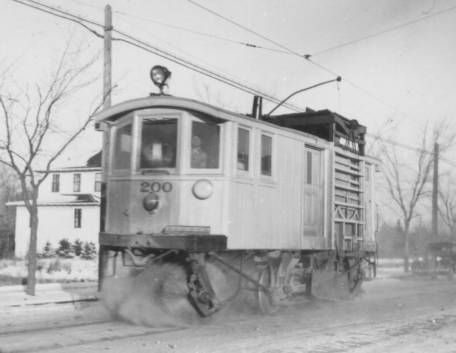
The interesting history of this electric locomotive goes back to 1912 when 4 units were built by American Locomotive Company and General Electric for the Oregon Electric Railway. Upon dieselization of the OER the locomotives were sold to the British Columbia Electric Railway (British Columbia Hydro after 1962) where they worked freight trains from 1946 until 1970. After 10 years in storage #961 was bought by Edmonton Transit, refitted and renumbered as ETS 2001. The locomotive was mainly used for hauling carloads of soil from the extension of the LRT tunnel under Jasper Avenue. Upon completion of the tunnel #2001 continued in service for hauling ballast trains, construction and maintenance equipment. Finally replaced by a diesel locomotive in 1998, #2001 was donated to the ERRS.

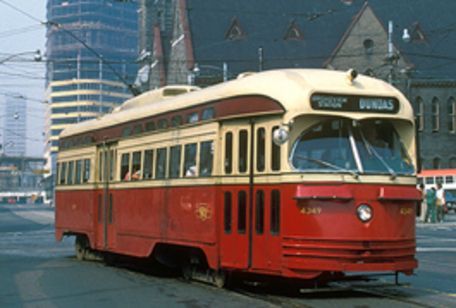
Toronto #4349

TTC #4349
TTC #4349 in Toronto (August 1975) © John F. Bromley

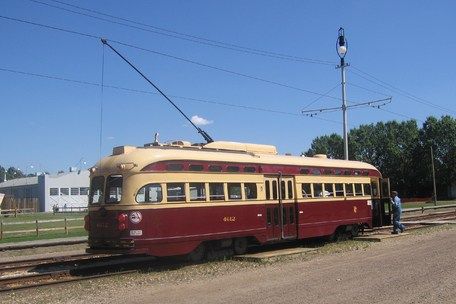
This PCC car built in 1948 by the Canadian Car & Foundry saw service with the Toronto Transit Commission until 1982. It was acquired by the Midwestern Rail Association, Winnipeg and - due to lack of storage space - passed on to the ERRS in 1995. The streetcar is in its last service condition, but would need re-gauging for use in standard gauge tracks.

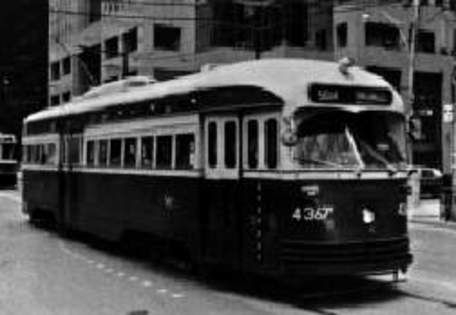
Toronto #4367

TTC #4367
TTC #4367 in Toronto (May 1, 1989) © Don Scafe, ERRS

Toronto once had the largest fleet of PCC cars in North America. # 4367 was built by the Canadian Car Company in 1948 and remained in service until 1989. The streetcar was donated by the Toronto Transit Commission to the ERRS immediately after being taken out of service. However, the trucks will require re-gauging from the special Toronto gauge (4' 10 7/8") to standard gauge.